All
Lifestyle & Wellness
Lens Technology
Eye Care Tips
Eye Health
Eyewear & Fashion
Finding stylish, comfortable eyeglasses doesn't have to mean spending a fortune. Whether you need prescription glasses for everyday use, affordable reading glasses, or a fashionable new frame, there are plenty of ways to find eyewear that fits your budget.
However, choosing the cheapest pair isn't always the best decision. Lens quality, prescription accuracy, frame durability, and comfort all matter when selecting glasses you may wear for hours every day.
So, where can you find affordable eyeglasses without compromising on the features that matter most?
In this guide, Eyeline Optica explores the best places to buy budget-friendly eyeglasses, what to look for when comparing prices, and how to find a pair that suits your vision needs and personal style.
Where Can You Buy Affordable Eyeglasses?
The best place to buy affordable eyeglasses depends on your prescription, budget, preferred shopping experience, and the type of frames you're looking for.
Here are five options worth considering.
1. Online Eyewear Stores
Online eyewear stores are a convenient option for shoppers looking for affordable prescription glasses and fashionable frames.
Shopping online allows you to compare different styles, browse product specifications, and check prices without visiting multiple physical stores.
Many online eyewear retailers offer different frame styles, including rectangular, round, oversized, and minimalist designs.
Why Shop for Glasses Online?
Online shopping offers several potential advantages:
A wide selection of frame styles
Convenient price comparisons
Easy access to product descriptions and measurements
The ability to browse from home
Opportunities to find promotional offers
However, there are a few things to check before ordering.
Make sure the retailer provides clear information about prescription requirements, lens options, shipping costs, returns, and adjustments.
If you're buying prescription glasses online, you should also have an accurate, current prescription and any measurements required by the retailer.
At Eyeline Optica, you can explore eyewear options and consider which styles best suit your everyday needs and budget.
2. Local Optical Stores
Local optical stores are another useful option when shopping for budget-friendly eyeglasses.
One of their biggest advantages is the opportunity to try frames on before making a purchase.
This can help you determine whether the glasses fit comfortably around your nose, temples, and ears.
Additionally, some optical stores offer basic frame adjustments and assistance with selecting suitable lenses.
What Should You Check Before Buying?
When visiting an optical store, consider asking about:
The total price of the glasses
Available budget-friendly frames
Prescription lens costs
Anti-reflective or other lens treatments
Warranty and repair policies
After-sales adjustments
Remember that the advertised frame price may not include prescription lenses.
Therefore, ask for the complete price before making a decision.
Comparing two or three stores can help you understand which option provides the best overall value.
3. Independent Eyewear Brands
Independent eyewear brands can be worth exploring if you want distinctive designs without automatically choosing a luxury label.
Some smaller brands offer minimalist frames, contemporary styles, and everyday eyewear at accessible price points.
However, prices and product quality vary between brands.
Before purchasing, check the frame material, lens specifications, available sizes, customer reviews, and return policy.
Don't assume that an independent brand is always cheaper than a large retailer. Compare the actual products and total costs before deciding.
Eyeline Optica encourages shoppers to consider both appearance and practicality when exploring different eyewear styles.
4. Optical Retailers Offering Discounts
Promotional offers can be another way to save money when buying eyeglasses.
Depending on the retailer, discounts may be available on selected frames, previous collections, prescription glasses, or additional pairs.
However, a discount doesn't automatically mean a product offers good value.
Before purchasing discounted eyeglasses, check:
Whether the frame suits your face
Whether the correct prescription lenses are included
Whether the discount applies to your preferred product
Whether shipping or other fees apply
Whether the retailer accepts returns or exchanges
Whether the product includes a warranty
For example, a discounted frame may initially appear cheaper, but the final cost could increase once prescription lenses and additional options are included.
Therefore, compare the total price rather than focusing only on the percentage discount.
5. Eyewear Websites With Virtual Try-On Tools
Some online eyewear retailers provide virtual try-on tools that let shoppers preview frames using a photograph or camera.
These tools can help you compare different styles before placing an order.
For example, you might want to see how round frames look compared with rectangular frames or compare different colours.
Virtual try-on can be particularly useful when you're shopping online and cannot physically handle the frames.
However, it has limitations.
A virtual preview cannot reliably tell you whether the bridge fits your nose, whether the temples create pressure, or whether the prescription lenses will provide the correct visual experience.
Use it as a styling tool, not a replacement for checking frame measurements and prescription requirements.
How Much Should You Spend on Eyeglasses?
There isn't one price that works for everyone.
The cost of eyeglasses depends on several factors, including the frame material, lens type, prescription strength, lens treatments, retailer, and location.
For example, basic single vision glasses may cost less than glasses requiring specialised multifocal lenses or additional treatments.
To stay within your budget, decide which features you genuinely need before shopping.
Prioritise Your Essential Features
Start by identifying your requirements.
Prescription accuracy: Your glasses must be made according to the appropriate prescription.
Comfortable fit: Frames should sit securely without creating unnecessary pressure.
Suitable lenses: Choose lenses that meet your prescription and daily visual needs.
Durable construction: Look for frames that can withstand normal everyday use.
Useful extras: Consider additional lens treatments when they address a genuine need.
By focusing on these priorities, you can avoid paying for features that offer little value for your situation.
How to Choose Affordable Prescription Glasses
Finding cheap prescription glasses is about more than selecting the lowest-priced frame.
You need to make sure the complete pair meets your visual requirements.
Here are several things to consider.
1. Know Your Prescription
Before ordering prescription glasses, make sure you have an accurate prescription.
If your prescription is outdated or your vision has changed, arrange an eye examination with an appropriate eye-care professional.
Avoid guessing your prescription simply to save money.
2. Compare the Total Cost
Some retailers advertise inexpensive frames but charge separately for lenses.
Others offer packages that include basic prescription lenses.
When comparing prices, include all relevant costs:
Frame
Prescription lenses
Lens coatings
Shipping
Taxes or other applicable charges
Adjustments, where necessary
This gives you a clearer picture of what you're actually paying.
3. Choose the Right Lens Type
Different lens types serve different purposes.
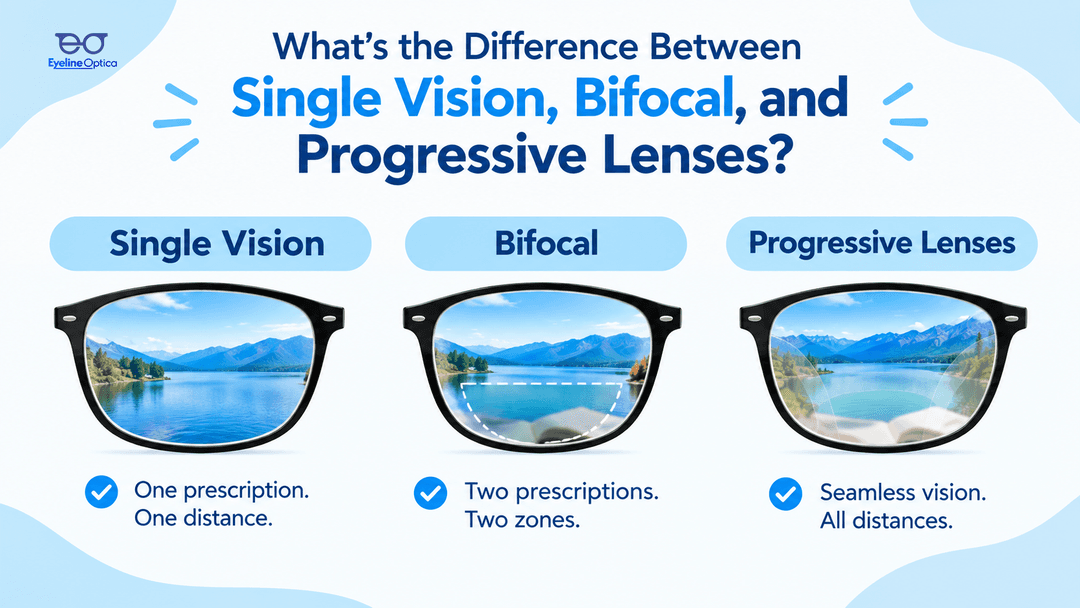
Single vision lenses correct vision at one primary distance. Bifocal lenses provide two distinct prescription zones, while progressive lenses offer multiple vision zones with a gradual transition.
The appropriate choice depends on your prescription and visual needs.
At Eyeline Optica, understanding these differences can help you make a more informed decision when exploring prescription eyewear.
4. Find a Frame That Fits Properly
An inexpensive pair of glasses isn't good value if it constantly slides down your nose or creates pressure around your temples.
Check the frame width, bridge fit, and temple length.
If you're shopping online, compare the measurements with a pair of glasses you already own that fits comfortably.
5. Check the Return Policy
Buying glasses online can be convenient, but you cannot always judge the actual fit from photographs.
Before placing an order, check whether the retailer allows returns or exchanges if the frame doesn't fit as expected.
Also, review the policy for prescription lenses, because customised products may have different return conditions.
Are Cheap Eyeglasses Worth Buying?
Yes, budget-friendly eyeglasses can be a sensible choice when they meet your prescription requirements and provide a comfortable, suitable fit.
However, the lowest price shouldn't be your only consideration.
Poorly fitting frames can be uncomfortable, while unsuitable or incorrectly made prescription lenses may interfere with clear vision.
When evaluating affordable glasses, consider the complete product rather than judging it by price alone.
Look for clear product information, reliable customer support, appropriate prescription fulfilment, and a reasonable return or adjustment policy.
The goal is to find glasses that provide good value for your money and meet your everyday needs.
How to Save Money When Buying Eyeglasses
If you're working with a limited budget, a few practical strategies can help you make a more informed purchase.
Compare Multiple Retailers
Don't settle on the first pair you find.
Compare similar frames across different retailers and check whether prescription lenses are included.
Choose a Practical Frame
Trendy frames can be appealing, but a comfortable design that suits your daily activities may provide better long-term value.
Consider whether you'll wear the glasses at work, while studying, when driving, or throughout the day.
Avoid Unnecessary Extras
Additional lens treatments may be useful, but not every option is necessary for every person.
Ask what each treatment does, whether it suits your needs, and how much it adds to the total cost.
Look for Seasonal Promotions
Some retailers run sales during particular periods or offer discounts on selected collections.
If your current glasses are still suitable and your prescription remains appropriate, comparing prices before purchasing can help you find a better offer.
Take Care of Your Glasses
Proper care can help extend the useful life of your eyewear.
Store your glasses in a protective case, clean the lenses with suitable materials, and avoid placing them lens-side down on hard surfaces.
Additionally, have loose or uncomfortable frames checked by an optician when necessary.
Why Consider Eyeline Optica When Exploring Eyewear?
Choosing affordable eyeglasses should be a straightforward experience.
At Eyeline Optica, shoppers can explore eyewear options while considering frame style, comfort, prescription requirements, and budget.
Whether you're looking for everyday frames or exploring different styles, it helps to understand what you're buying before making a decision.
When browsing eyewear at Eyeline Optica, consider these questions:
Does the frame match your personal style?
Is the size appropriate for your face?
Are the lens options suitable for your prescription?
Is the total cost within your budget?
Do you understand the available return and warranty policies?
Taking a little time to compare these details can help you make a more confident choice.
To explore the available products and services, visit the official Eyeline Optica website.
Final Thoughts
Finding budget-friendly eyeglasses doesn't mean you have to sacrifice style or comfort.
Online eyewear stores, local optical shops, independent brands, promotional offers, and virtual try-on tools can all help you explore different options.
However, the best choice depends on more than the initial price.
Always consider your prescription, frame measurements, lens requirements, durability, and after-sales support before purchasing.
By comparing the complete cost and prioritising the features that matter most, you can find eyeglasses that suit both your vision needs and your budget.
Eyeline Optica is a place to begin exploring eyewear options and considering which frames work best for your everyday life.
Frequently Asked Questions
Where is the best place to buy affordable eyeglasses?
Online eyewear stores, local optical shops, independent brands, and retailers offering discounts are all worth considering. Compare the complete price, lens options, fit, and return policy before purchasing.
Are online eyeglasses cheaper than glasses from optical stores?
Prices vary by retailer, frame, lens type, and prescription. Online stores may offer competitive prices, while local optical shops may provide in-person fitting and adjustment services. Compare the total cost to determine which option offers better value.
How can I buy prescription glasses on a budget?
Start with an accurate prescription, compare complete package prices, select a suitable frame, and avoid paying for unnecessary extras. Make sure the lenses meet your visual requirements.
Are inexpensive glasses safe to wear?
Affordable glasses can be suitable when they are correctly made for your prescription and fit properly. For prescription eyewear, use a reliable provider and consult an eye-care professional if you experience persistent discomfort or vision problems.
Should I buy eyeglasses online or in person?
Online shopping provides convenience and makes price comparisons easier. In-person shopping allows you to try frames before purchasing and may offer immediate fitting assistance. Your choice depends on your needs and preferences.
How can I tell whether eyeglasses are good value for money?
Consider the total price, frame durability, prescription accuracy, lens specifications, comfort, warranty, and return policy. A slightly more expensive pair may offer better value if it meets your needs and lasts longer.
Can I find stylish eyeglasses without spending a lot?
Yes. Many frame styles are available at different price points. Compare designs, sizes, materials, and prices to find an option that matches your personal style and budget.
Choosing the right prescription lenses can be confusing, especially when you see terms like single vision, bifocal, and progressive lenses.
Although all three are designed to correct vision, they work differently and are intended for different visual needs. Understanding the difference between single vision, bifocal, and progressive lenses can help you make a more informed choice when selecting your next pair of prescription glasses.
At Eyeline Optica, we understand that every person's vision needs are different. In this guide, we'll explain how each type of prescription lens works, who may benefit from it, and what you should consider before choosing your glasses.
What Are Prescription Lenses?
Prescription lenses are specially made to correct specific vision problems based on your eye examination and prescription.
Depending on your prescription, you may need lenses to correct:
Nearsightedness (myopia)
Farsightedness (hyperopia)
Astigmatism
Presbyopia
More than one focusing distance
The main difference between single vision, bifocal, and progressive lenses is how they provide vision correction across different distances.
Let's look at each option in more detail.
What Are Single Vision Lenses?
Single vision lenses are designed to provide vision correction for one viewing distance.
Depending on your prescription, they may be used for:
Distance vision
Near vision
Computer or intermediate vision
For example, someone who is nearsighted may use single vision glasses to see distant objects more clearly.
Someone who needs reading glasses may use single vision lenses specifically for close-up tasks.
Who Are Single Vision Lenses For?
Single vision glasses can be suitable for people who only need correction at one primary distance.
They are commonly used by people with:
Myopia
Hyperopia
Astigmatism
A need for reading correction at a specific distance
Single vision lenses are also often used for prescription sunglasses and specialized computer glasses.
Benefits of Single Vision Lenses
One of the main advantages of single vision lenses is their simplicity.
They provide one consistent prescription across the lens, which means there is no visible dividing line or gradual transition between different prescription zones.
Single vision glasses can also be a straightforward option when you only need correction for one viewing distance.
At Eyeline Optica, single vision lenses can be considered when your prescription and everyday visual requirements call for a single focusing distance.
What Are Bifocal Lenses?
Bifocal lenses are designed to provide two different areas of vision correction within the same lens.
Traditionally, the upper portion of a bifocal lens is used for distance vision, while a smaller section toward the bottom is used for near vision.
The two prescription areas are separated by a visible line.
For someone who needs both distance and reading correction, bifocal glasses can provide both prescriptions in one pair of lenses.
Who Are Bifocal Lenses For?
Bifocal lenses are commonly associated with people who experience presbyopia, an age-related change that makes it harder to focus on nearby objects.
They can be useful for someone who needs correction for both:
Distance vision
Near vision
Instead of carrying separate distance and reading glasses, bifocals provide both corrections in one pair.
Benefits of Bifocal Glasses
Bifocal lenses have been used for many years and offer a practical way to combine two prescriptions.
Some advantages include:
Distance and near correction in one pair
No need to switch between separate glasses for those two distances
Clear distinction between the two vision zones
Available in a variety of frame styles
However, bifocal lenses have a visible line between the two prescription areas. Some people also need time to adjust to the change between the two viewing zones.
What Are Progressive Lenses?
Progressive lenses are multifocal lenses that provide correction for distance, intermediate, and near vision without a visible dividing line.
Instead of having two clearly separated prescription areas, progressive lenses gradually change power from the upper portion of the lens toward the lower portion.
This allows you to look through different areas of the lens for different viewing distances.
For example:
The upper area is generally used for distance vision.
The middle area is used for intermediate distances, such as computer screens.
The lower area is generally used for close-up activities such as reading.
Because there is no visible line, progressive glasses provide a more seamless appearance than traditional bifocal glasses.
Who Are Progressive Lenses For?
Progressive lenses are commonly used by people who need correction for multiple viewing distances.
They can be particularly useful for people experiencing presbyopia who also need distance correction.
Progressive glasses can reduce the need to switch between multiple pairs of glasses throughout the day.
For example, someone may use the same pair of progressive glasses to:
Drive
Look at a computer
Read a book
Use a smartphone
Perform everyday activities
However, progressive lenses are not automatically the right choice for everyone. Your prescription, lifestyle, visual requirements, and ability to adapt to multifocal lenses should all be considered.
Single Vision vs Bifocal vs Progressive Lenses
The easiest way to understand the differences is to compare how each lens provides vision correction.
Lens Type
Vision Correction
Visible Line
Common Use
Single Vision
One viewing distance
No
Distance, reading, or computer vision
Bifocal
Two viewing distances
Yes
Distance and near vision
Progressive
Multiple viewing distances
No
Distance, intermediate, and near vision
The right option depends on what you need your glasses to do.
What Is the Main Difference Between Bifocal and Progressive Lenses?
The biggest difference is how the lens transitions between prescriptions.
Bifocal lenses have two distinct prescription zones separated by a visible line.
Progressive lenses provide multiple prescription zones that gradually transition from distance to near vision.
This creates a different visual experience.
With bifocals, the change between distance and near vision is more obvious. With progressive lenses, the transition is designed to be gradual.
Progressive lenses also provide an intermediate vision area, which can be particularly useful for activities such as computer work.
Are Progressive Lenses Better Than Bifocals?
There isn't one lens type that is universally better for everyone.
The right choice depends on your prescription and lifestyle.
Progressive lenses may appeal to people who want one pair of glasses for multiple distances without a visible line.
Bifocals may be appropriate for people who prefer clearly defined distance and near vision zones.
Your eye-care professional can help determine which option is appropriate based on your prescription and visual needs.
At Eyeline Optica, understanding your everyday activities can help you explore the prescription lens options that may suit you.
What Is Presbyopia?
Presbyopia is a common age-related change in the eye's ability to focus on nearby objects.
It can make activities such as reading small text, using a smartphone, or working with objects up close more difficult.
People with presbyopia may hold reading material farther away or experience difficulty focusing on close objects.
Depending on the individual's prescription, vision correction for presbyopia may involve reading glasses, bifocals, progressive lenses, or other options recommended by an eye-care professional.
Which Lenses Are Best for Computer Use?
Computer work usually requires intermediate vision rather than purely distance or close-up vision.
Single vision computer glasses can be designed specifically for a particular working distance.
Progressive lenses can also provide an intermediate vision zone, although the available viewing area and lens design can vary.
If you spend several hours each day working at a computer, tell your optician about your typical screen distance and work setup.
This information can help when selecting the appropriate lens design.
Can You Switch From Bifocals to Progressive Lenses?
Yes, many people who currently wear bifocal glasses can transition to progressive lenses.
However, progressive lenses have a different design and may require an adjustment period.
Your eyes and brain need to become accustomed to using different parts of the lens for different distances.
Some people adapt quickly, while others may need more time.
Proper frame selection and accurate measurements are also important when fitting progressive lenses.
What Should You Consider Before Choosing Prescription Lenses?
Choosing between single vision, bifocal, and progressive lenses isn't simply about age.
Consider your daily activities and how you use your vision.
Ask yourself:
Do I only need correction for one distance?
Do I need both distance and reading correction?
Do I regularly use a computer?
Do I frequently switch between looking far away and reading?
Do I want one pair of glasses for multiple distances?
Am I comfortable with a visible bifocal line?
Have my vision needs changed recently?
Your answers can help you have a more useful conversation with your optician.
Why Accurate Measurements Matter
The quality of your prescription is only part of getting comfortable glasses.
Accurate measurements are also important, particularly when choosing multifocal lenses.
Measurements such as pupillary distance and fitting height can affect how the prescription is positioned in front of your eyes.
This is particularly relevant for progressive lenses because the different vision zones need to be positioned appropriately.
Therefore, professional fitting can be an important part of getting the most from your new prescription glasses.
Choosing Your Next Prescription Glasses at Eyeline Optica
Whether you need single vision glasses, bifocal glasses, or progressive lenses, choosing the right lens starts with understanding your vision requirements.
At Eyeline Optica, you can explore different eyewear options while considering your prescription, lifestyle, comfort, and personal preferences.
If you're unsure which lens type is suitable for you, speak with an eye-care professional or optician who can assess your vision needs and recommend an appropriate option.
The goal isn't simply to find a pair of glasses that looks good. It's to find prescription eyewear that works comfortably with the way you use your vision every day.
Final Thoughts
Single vision, bifocal, and progressive lenses all serve different purposes.
Single vision lenses provide correction for one primary viewing distance. Bifocal lenses combine two distinct prescription zones, typically for distance and near vision. Progressive lenses provide multiple vision zones with a gradual transition and no visible line.
The right choice depends on your prescription, daily activities, visual requirements, and personal preferences.
If you're considering new prescription glasses, Eyeline Optica can be a starting point for exploring different eyewear and lens options. Discuss your needs with an eye-care professional to determine which lens design is appropriate for your vision.
Frequently Asked Questions
What is the difference between single vision and progressive lenses?
Single vision lenses provide correction for one primary viewing distance, while progressive lenses provide multiple prescription zones for distance, intermediate, and near vision.
Are bifocal glasses better than progressive glasses?
Neither option is universally better. Bifocals provide two distinct vision zones, while progressive lenses provide multiple zones with a gradual transition. The appropriate choice depends on your prescription, lifestyle, and visual needs.
Do progressive lenses have a visible line?
No. Progressive lenses are designed without the visible dividing line found in traditional bifocal lenses.
Are progressive lenses good for computer use?
Progressive lenses include an intermediate vision area that may be useful for computer work. However, some people may benefit from dedicated computer or occupational lenses depending on their work distance and visual needs.
At what age do people need bifocals or progressive lenses?
There is no specific age at which everyone needs bifocal or progressive lenses. Presbyopia is an age-related change in near focusing ability, and the appropriate vision correction depends on the individual's eyes and prescription.
Can I use one pair of glasses for reading and distance vision?
Bifocal and progressive lenses can combine distance and near vision correction in one pair of glasses. The appropriate lens design depends on your prescription and visual requirements.
How do I know which prescription lenses are right for me?
An eye-care professional can assess your prescription and discuss your daily visual needs. Your work, reading habits, computer use, driving, and other activities can all be relevant when choosing between single vision, bifocal, and progressive lenses.
Finding the right pair of eyeglasses is not only about choosing a style you like. Your glasses should also fit comfortably, suit your facial proportions, and sit correctly on your nose and ears.
With so many frame shapes, sizes, and designs available, choosing the right pair can feel difficult. However, understanding your face shape and knowing what to look for in a frame can make the process much easier.
Whether you're shopping for prescription glasses, everyday eyewear, or a new fashion frame, this guide will help you understand how to choose eyeglasses that suit your face and provide a comfortable fit.
Why Does Face Shape Matter When Choosing Glasses?
Your face shape can help you decide which frame styles you may want to try.
For example, angular frames can create contrast with softer facial features, while rounded frames can complement faces with more defined angles.
However, face shape is only one part of finding the right glasses. Your face size, nose shape, eye position, and frame measurements also affect how a pair of glasses looks and feels.
When choosing eyeglasses, consider:
Your overall face shape
The width and length of your face
Frame width
Lens size
Bridge width
Temple length
Nose shape
Personal style
Everyday comfort
Therefore, instead of looking for one specific frame that is supposed to be perfect for your face shape, use your face shape as a starting point and then check the actual fit.
How to Determine Your Face Shape
Before choosing your glasses, take a close look at your face from the front.
You can stand in front of a mirror or take a straight-on photograph with your hair away from your face.
Look at the overall outline of your face and consider:
Is your face longer than it is wide?
Which part of your face is the widest?
Is your jawline rounded or angular?
Is your forehead wider than your jaw?
Do your facial features appear soft or defined?
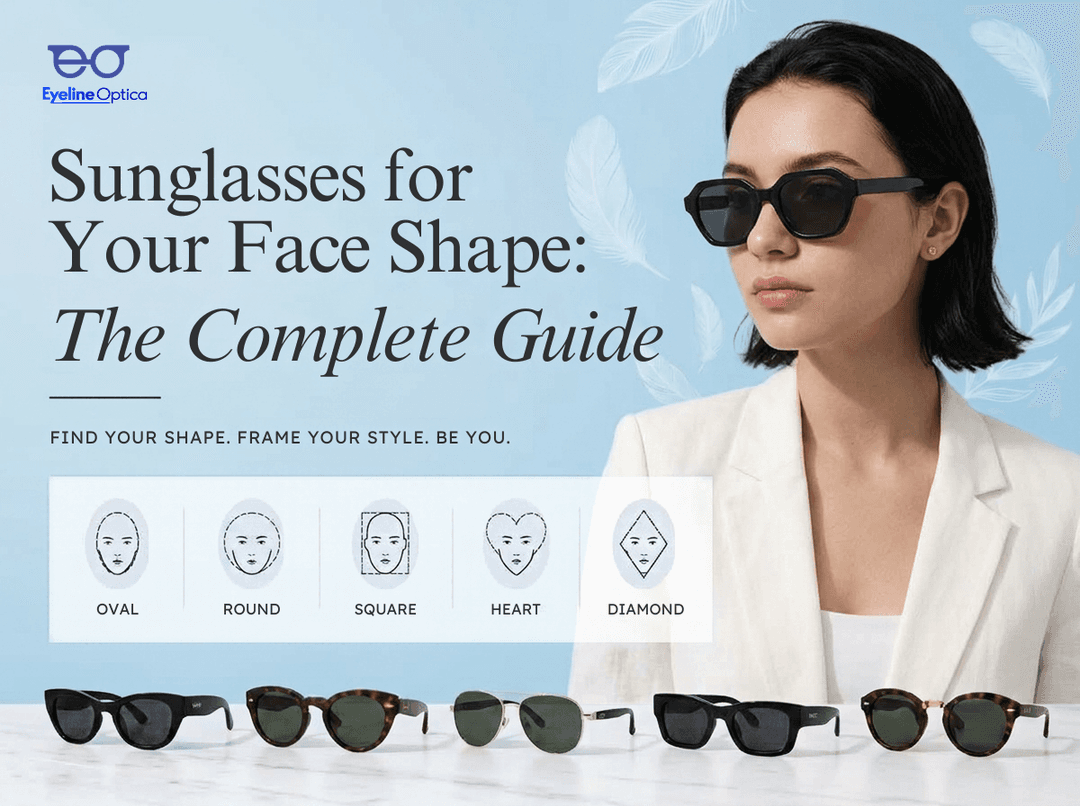
Most people can identify with one of several general face shapes, including oval, round, square, heart-shaped, and oblong.
Keep in mind that faces don't always fit perfectly into one category. Your face may have characteristics of more than one shape.
Glasses for an Oval Face
An oval face generally has balanced proportions, with the cheekbones often being slightly wider than the forehead and jawline.
Because of these balanced proportions, many different frame styles can work with an oval face.
You can experiment with:
Square frames
Rectangular frames
Round frames
Geometric frames
Cat-eye frames
The most important consideration is still the size of the frame.
A frame that is too large can overwhelm your features, while a frame that is too small may look narrow or feel uncomfortable.
Glasses for a Round Face
Round faces generally have softer features, with a similar width and length and fewer sharp angles.
If you want to create contrast, frames with straight or angular lines can be a useful option.
Consider trying:
Rectangular frames
Square frames
Geometric frames
Slightly wider frames
These styles can add definition to softer facial features.
However, you don't have to avoid round frames simply because you have a round face. If you like rounded glasses, you can still wear them. The frame should ultimately fit comfortably and match your personal style.
Glasses for a Square Face
Square faces typically have a more defined jawline and noticeable angles around the forehead and cheeks.
If you want to soften those angles visually, rounded and oval frames can create contrast.
Some options to explore include:
Round frames
Oval frames
Soft rectangular frames
Thin metal frames
On the other hand, geometric frames can emphasize the natural structure of a square face if you prefer a stronger and more defined look.
There is no single rule that everyone has to follow. Your personal preference is just as important as your face shape.
Glasses for a Heart-Shaped Face
A heart-shaped face is generally wider around the forehead and cheekbones and becomes narrower toward the chin.
When choosing glasses, consider frames that complement these proportions without making the upper part of your face look overly heavy.
You can explore:
Round frames
Oval frames
Lightweight frames
Subtle cat-eye styles
Additionally, pay attention to the overall width of the frame. A good frame should complement your facial proportions rather than simply follow a particular face-shape rule.
Glasses for an Oblong or Long Face
An oblong face is generally longer than it is wide.
Frames with greater lens depth can help create a balanced appearance. Wider frames may also work well as long as the frame isn't too wide for your face.
You can consider:
Deeper rectangular frames
Larger round frames
Oval frames
Geometric frames
Oversized frames that fit properly
Remember that choosing an oversized frame doesn't mean choosing the largest frame available. The glasses still need to sit securely and comfortably.
Face Shape Is Only the Starting Point
Knowing your face shape can help you choose a style, but it doesn't tell you everything about how a pair of glasses will fit.
Two people can have the same face shape but require completely different frame sizes.
For example, one person may have a narrow face with a round shape, while another may have a wider face with similar proportions.
That's why you should consider both appearance and measurements when choosing your glasses.
Understanding Eyeglass Frame Measurements
If you already own a pair of glasses that fits well, check the inside of one of the temple arms.
You may find numbers similar to:
54 □ 18 – 140
These numbers generally indicate:
54 mm: Lens width
18 mm: Bridge width
140 mm: Temple length
These measurements are normally expressed in millimeters.
Your existing glasses can therefore give you a useful reference when shopping for another pair. Learn more about eyeglass frame measurements
Lens Width
Lens width is the horizontal measurement of one lens.
For example, a frame marked with 54-18-140 generally has a lens width of approximately 54 mm.
Bridge Width
Bridge width refers to the space between the two lenses.
This measurement is important because the bridge determines how the frame rests on your nose.
A bridge that is too narrow may feel uncomfortable, while one that is too wide may allow the glasses to slide down.
Temple Length
Temple length refers to the length of the arms that extend from the frame toward your ears.
The temples should be long enough to sit comfortably behind your ears without creating unnecessary pressure.
How Should Eyeglasses Fit?
A good pair of glasses should feel secure without being uncomfortable.
When trying on a frame, check several areas before deciding whether it fits.
Check the Frame Width
The frame should be appropriately proportioned to your face.
A frame that is too narrow can create pressure around your temples. A frame that is too wide may move around or slide down.
Check Your Eye Position
Look straight ahead while wearing the glasses.
Your eyes should be appropriately positioned within the lens openings. This is particularly important when buying prescription eyewear because lens positioning is part of proper optical fitting.
Check the Bridge
The bridge should sit comfortably on your nose.
If your glasses constantly slide down, the bridge design or frame adjustment may not be right for you.
Check the Temples
The arms of the glasses should rest comfortably along the sides of your head.
They should hold the frame securely without creating excessive pressure around your ears or temples.
Check Your Cheeks
Smile while wearing the glasses.
The frame should not constantly touch your cheeks or move upward when you smile.
This is especially important if you're considering larger or oversized frames.
What Are Low Bridge or Asian Fit Glasses?
Some people find that standard eyeglass frames don't sit comfortably on their nose.
For this reason, some eyewear brands offer frames described as "low bridge fit" or "Asian fit."
These designs may include features intended to provide a different bridge fit or improved support around the nose.
However, not everyone with the same ethnic background has the same facial structure. Therefore, the actual fit of the frame is more important than the label used to describe it.
If your glasses frequently slide down your nose or don't sit correctly, a different bridge design may be worth considering.
How to Choose Glasses When Shopping Online
Shopping for glasses online can make it harder to judge the fit before purchasing.
Fortunately, you can reduce the guesswork by using a pair of glasses you already own.
First, find a pair that fits you comfortably.
Then check the numbers printed on the inside of the temple arm.
For example:
52 □ 18 – 140
Use those measurements as a reference when comparing new frames.
However, remember that two frames with similar measurements may still fit differently.
Frame shape, lens height, bridge design, nose pads, and construction can all affect how the glasses sit on your face.
Don't Forget Your Pupillary Distance
If you're buying prescription glasses, pupillary distance, commonly known as PD, is another important measurement.
PD is the distance between the centers of your pupils.
This measurement helps position the optical centers of prescription lenses correctly in relation to your eyes.
If you don't know your PD, ask your optician or eye-care professional for assistance.
You can learn more about PD and eyeglass measurements from All About Vision's guide to measuring glasses.
Common Mistakes When Choosing Eyeglasses
Finding the right glasses becomes easier when you know which mistakes to avoid.
Choosing Glasses Only Because of Face Shape
Face shape is useful, but it doesn't determine your ideal frame size.
Always consider measurements and comfort as well.
Ignoring Frame Measurements
A frame can look great in a photograph but feel completely different when you actually wear it.
Always check the measurements when buying glasses online.
Choosing Frames That Are Too Large
Oversized glasses can create a bold look, but they still need to fit correctly.
If the glasses constantly slide down or your eyes appear poorly positioned within the lenses, the frame may be too large.
Choosing Frames That Are Too Narrow
A narrow frame can create pressure around your temples and may become uncomfortable after wearing it for several hours.
Focusing Only on Appearance
Eyeglasses are often worn for many hours each day.
Therefore, comfort should be just as important as appearance.
A Simple Eyeglass Fit Checklist
Before buying your next pair, check the following:
Does the frame width suit your face?
Are your eyes positioned correctly within the lenses?
Does the bridge sit comfortably?
Do the glasses stay in place when you move?
Are the temples comfortable?
Do the frames touch your cheeks?
Have you checked the lens width?
Have you checked the bridge width?
Have you checked the temple length?
Do you have the correct PD for prescription lenses?
Does the frame match your personal style?
If the answer to these questions is yes, you're much more likely to find a pair that works for everyday wear.
What If Your Glasses Don't Fit Properly?
If your glasses don't feel right, you may not necessarily need to replace them.
Many eyeglass frames can be adjusted by an optician.
Depending on the frame, adjustments may improve the way the temples, nose pads, or other parts sit on your face.
If your glasses consistently cause pressure, slide down, or feel uncomfortable, consider having them professionally checked rather than trying to force the frame into a different position.
Final Thoughts
Finding the right eyeglasses involves more than knowing whether your face is oval, round, square, heart-shaped, or oblong.
Your face shape can help you discover frame styles that complement your features. However, the actual fit depends on several other factors, including frame width, bridge size, temple length, eye position, and facial proportions.
If you're shopping online, compare the measurements of new frames with a pair you already know fits well.
Most importantly, use face-shape guides as a starting point rather than a strict set of rules.
The right glasses should look good, feel comfortable, and fit naturally into your everyday life.
Frequently Asked Questions
What glasses are best for my face shape?
There is no single frame that is universally best for a particular face shape. Your face shape can help you explore different styles, while frame size, facial proportions, comfort, and personal preference should guide your final choice.
How do I know what size glasses I need?
Check the measurements printed on a pair of glasses that already fits you well. The three common measurements are lens width, bridge width, and temple length.
Should glasses be wider than your face?
Your glasses should generally be appropriately proportioned to your face around the temples. A frame that is significantly too wide or too narrow may feel uncomfortable or affect how the lenses sit in front of your eyes.
Why do my glasses keep sliding down?
Glasses can slide because of the bridge design, frame adjustment, temple fit, or the way the frame sits on your nose. An optician can check the fit and make appropriate adjustments.
What do numbers like 54-18-140 mean on glasses?
These numbers generally represent the lens width, bridge width, and temple length, respectively. The measurements are given in millimeters.
Do I need my PD when buying prescription glasses online?
PD helps position prescription lenses correctly in relation to your pupils. If you don't know your measurement, ask an optician or eye-care professional for assistance.
Can I choose glasses based only on my face shape?
It's better not to. Face shape can help you choose a frame style, but frame measurements, bridge fit, eye position, and comfort are also important. At Eyeline Optica you will get the proper advice and the best services.

Today, almost all of us use digital devices for long periods, and as a result, eye strain has become a very common problem. You may have noticed that if you use the phone for a long time, it causes problems like eye irritation, dry eyes or heavy eyes.
But the good news is that by following some simple habit changes and proper eye care, you can easily reduce eye strain and keep your eyes healthy.
In this guide, you will know how to reduce eye strain caused by digital devices and daily phone use, what are the problems and how to protect your eyes in practical ways.
Eyeline Optica is here to support your eye health in today’s digital lifestyle. We have experienced optometrists and advanced computerized eye examination facilities to detect issues like blurred vision, headaches, and eye strain. We also offer premium blue-cut lenses to help protect your eyes from harmful blue light, along with a wide range of contact lenses and stylish frames. So visit our outlet today or enjoy our one-stop eye care service at home without compromising on eye protection!

Nowadays we all use more or less digital devices like phones, laptops, tabs etc. This habit is gradually becoming a leading cause of digital eye strain. When you use digital screens for long periods, your eyes have to work harder than usual, which leads to strain, and eyes work harder and this is where the problem starts.
This condition is sometimes called strain or computer vision syndrome. Especially for those who regularly stare at their phones, it is very common.
Now notice the symptoms of eye irritation, eye discomfort, dry eye, eyes feel heavy or eyes feel tired, these are common symptoms of digital eye strain. Many times we do not understand, but due to less blinking, the moisture in the eyes decreases, and the problem increases from there.

When you use a phone or any other screen, you not only see the content but also unknowingly see blue light from digital devices in your eyes. This blue light is actually high-energy visible light, which gradually creates pressure on the eyes if seen for a long time.

Blue light comes from every digital screen, and this blue light emitted by screens can cause eye discomfort if you spend a long time in front of them. Although many people think it is a small matter, the reality is that prolonged exposure is too strong wording.
According to the American Academy of Ophthalmology, while blue light does not directly cause major permanent eye damage, it does cause eye strain, dryness and damage to the sleep cycle.
So the main focus should be how to protect the eyes and prevent eye damage from phones. Small changes like reducing screen time and using blue cut lenses will keep your eyes healthy in the long term. And if you want to buy the best blue cut lens, Eyeline Optica is there.
If you really want to reduce digital eye strain, then the easiest and most effective method is the 20-20-20 rule. It is not a hard rule but a small habit, which can give your eyes a lot of comfort.
The 20-20-20 rule is very simple: every 20 minutes, you have to look at something 20 feet away for at least 20 seconds. It relaxes your eye muscles and reduces the stress of looking at the screen for a long time. Simply put, it gives your eyes a break and refreshes them.
It’s completely normal to forget these steps at first! Here are some simple ways to remember it:
Create pop-ups on your phone or computer
Let yourself take a break between tasks
Make a conscious effort to look out the window
If you choose to implement the 20-20-20 rule, you will have the added benefit of a significant reduction in eye strain in addition to a greater level of comfort with your eyes.
Set up your workspace in the proper position and you will reduce eye strain significantly. Screen position, brightness, and even a lack of blinking can increase eye strain, but correcting these factors is simple.
Let's start with brightness. Very bright or very dull screens are both distractions. Find that happy medium with brightness that matches the surrounding lighting.
You must also consider the lighting on the screen. When light reflects on the screen, your eyes have to work to view the screen. Reduce this reflection. You may need to adjust the angle of the screen.
Your screen should also be positioned at or slightly below level with your eyes. This prevents your eyes from working to view the screen, especially during longer sessions.
Now coming to blink which we almost forget. When you focus on the screen, you naturally blink less. This results in dry eyes and irritation.
So try to blink consciously sometimes. It is a very small habit, but it helps to keep your eyes moist and keep your eyes comfortable.
If you fix the screen setup and pay attention to blinking, your eyes will be relaxed even during daily phone use.
We all know it’s not possible to completely avoid screens because work, study or entertainment now requires a phone. But if you follow smart eye care, you can easily protect your eyes and reduce the damage of daily screen time.
When you use your phone for a long time, dry eyes are very common. In this case, using eye drops or artificial tears brings back moisture to the eyes and relieves your eyes immediately. This is especially useful for contact lens users.
Another important thing is to take breaks. Many people work continuously, but if they don't take regular breaks, the pressure on the eyes keeps accumulating. So take small breaks between work, it helps reduce eye fatigue and helps to keep the eyes relaxed.
Managing screen time is equally important. Reduce unnecessary scrolling, and if possible limit phone use at night time.
If you have regular eye problems, consult an eye doctor or ophthalmology specialist without delay. Because taking early care can easily avoid major problems.
Given our digital lifestyles, investing in eye care is now essential. Increased screen time can lead to a host of vision impairments. These habits can be reversed by minimizing screen time, taking more breaks, focusing on preventive eye care, and building on the practices presented in the guide. These strategies will help you manage the ongoing issue of digital eye fatigue. Protect your vision now with Eyeline Optica.
1. What is the problem with the eyes if you use mobile phones more?
When you use mobile phones for long periods, your eyes get stressed from constantly focusing on screens. The symptoms include, but are not limited to, eye fatigue, dry eyes, and even a headache due to focusing on something the same for too long which leads to loss of vision clarity.
2. Does the 20-20-20 rule really work?
Yes, it is a very effective method. Looking 20 feet away for 20 seconds every 20 minutes gives the eyes a chance to relax. It reduces eye strain and makes eyes fresh. If you follow regularly you will understand the difference yourself.
3. Blue light is harmful to the eyes?
Although there is no strong evidence that blue light directly causes major damage, it increases eye strain and affects sleep. So if you use the screen for a long time, it is better to control the blue light, it makes the eyes very comfortable.
4. What should be done if the eyes are dry?
If the eyes are dry, the easiest solution is to use artificial tears or eye drops. Increase the habit of blinking with it and take your eyes off the screen occasionally. You will get quick relief.
5. How long a day screen use is considered safe?
There is no specific limit, but continuous use for long periods is harmful. Try to take a break every 20-30 minutes. Managing screen time is the most important thing here.
6. When should I see the eye doctor?
If there is regular eye pain, blurred vision, or irritation and does not get better after taking simple care, then an eye doctor should be seen without delay. Early checkup can avoid major problems.

These days, many people are using contact lenses, because it not only keeps their vision in good condition but also makes them look much more natural. However, just wearing them is not enough; if you do not know how to care for contact lenses properly, you may have problems with your eye care, and even eye infections may occur.
Using, cleaning, and storing contact lenses correctly is the key to keeping your eyes safe. In this guide, you will learn about contact lenses and eye care basics, including a proper care routine, a step-by-step cleaning process, and some common mistakes.
In addition to ensuring proper care of contact lenses, Eyeline Optica is at your side for all your eye needs. We have a huge collection of all types of contact lenses, from soft lenses to GP lenses and daily disposable lenses, depending on your eye condition. We offer a wide collection of high-quality eyeglass lenses, trendy frames and sunglasses along with contact lenses. We also have eye testing facilities by experienced experts, which will help you get the most accurate vision. So, choose everything from contact lenses to glasses or lens solutions from our collection.
These days, many people use contact lenses to maintain their eyesight. But it is not enough to just wear lenses; it is very important to know proper eye care, otherwise eye problems may occur. If you are a new contact lens wearer, then you need to understand how to wear contact lenses safely from the beginning.
There are different types of contact lenses at Eyeline Optica, such as soft contact lenses, soft lenses, GP lenses, and daily disposable lenses or extended wear lenses, depending on the use. It is always safest to consult an eye doctor to decide which one is best for you. Because the right recommended contact lens keeps your eyes comfortable.
The most important thing is to maintain your eye health. Using lenses incorrectly can easily cause eye infections, which is very painful. So, if you are a little aware from the beginning, your entire contact lens wearing experience will be much safer and more comfortable.
When using contact lenses, it is not just about knowing how to wear them, the real thing is to follow the correct care system. A little mistake can cause discomfort or problems in the eyes, so it is very important to know the rules. Don't worry, it is not difficult, it is just a matter of habit.
Following the correct care system is very important for a contact lens wearer. Because if contact lens care systems are not followed properly, irritation or infection can occur in the eyes.
Care solutions are usually used to keep lenses clean, such as contact lens care solution, multipurpose solution and saline solution. These keep the lenses clean and help clean and disinfect them properly. It is always best to use a fresh solution, especially if it is taken from a trusted solution manufacturer.
Many people stop at just cleaning, but the real thing is to take regular care of your contact lenses. This ensures your proper care and the lenses stay good for a long time.
By developing good care habits, your lens hygiene will be good, and you will get the best care experience.
Cleaning contact lenses properly is not just a habit, it is a very important step for your eye health. Many people skip it in a hurry, but it risks eye irritation or infection. So taking a little time to do it properly is the real safety.
First, you have to wash your hands well. It is important to clean them properly with soap, not just water. Then make sure to wash your hands and finally dry your hands well, so that no dust or bacteria gets on the lenses. This small step saves you from many big problems.
Then take out your contact lenses very carefully. If you rush during this step, it can cause problems, so do it slowly. It is best to avoid touching your contact lenses with dirty hands while handling your lenses, and always handle your lenses cleanly.

Proper cleaning technique helps remove dirt and protein buildup from your lenses. Cleaning with proper technique will get rid of all gathered dirt and finish off the protein build which has attached to the top of your lenses. Lenses can actually be quite comfortable if you follow this!
Then you have to rub the lens lightly, this is a very important step. Then rinse it well so that all the residue comes out. If you do not do this part properly, dirt can remain on the lenses.
Finally, you have to clean and disinfect it properly using the right solution. This makes the lenses completely safe and there is no discomfort while wearing them. This step is actually the most important part of the entire process.

Sometimes, even after cleaning, lenses may feel uncomfortable if they are not stored properly. The reason is you didn’t store the lenses properly after cleaning them. Authorities suggest you take care of storage of lenses & maintain proper case hygiene. Simple habit but can help a lot in your ocular safety.
You should always store your contact lenses properly. Never leave your lenses in the open, always use a clean contact lens case.
You must clean your lens case after use and never use the case with water. Rather, cleaning and storing them with fresh solution is the best way. This will help you keep your lenses safe.
After cleaning the lens case, you should keep it in the open and air dry, so that no bacteria accumulates. Apart from this, using solution and rewetting drops occasionally will keep the lenses fresher.
The most important thing is to change the lens case regularly every three months, which means you should use a new case every three months. It is a small habit, but it plays a big role in protecting your eyes from infection.
Contact lenses make life much easier if used correctly, but if used incorrectly, they can cause eye problems. So it is very important to be a little aware. If you follow the rules, you can easily keep your eyes healthy and avoid problems.
Always try to wear contact lenses safely. Wearing contact lenses correctly provides comfort to the eyes and reduces problems.
Remember, you should always use contacts safely and wear lenses as directed. It is never a good idea to sleep with lenses overnight, and you should also avoid using lenses before swimming, as they are risky for the eyes.
Many contact lens users make small mistakes, which later create big problems. Below are some common contact lens-related mistakes:
Not cleaning the lenses properly, which can cause eye infections.
Repeatedly using old lenses, not replacing lenses on time.
Continuing to use them even if they cause discomfort to the eyes.
Using the wrong solution or not cleaning them.
Not using a pair of glasses when necessary.
Not going to an eye care provider if there is a problem.
These small mistakes can often lead to serious eye infections, which is very painful. So, being a little aware can keep the whole thing safe.
When using contact lenses, it is not just about wearing them, but knowing proper contact lens care is the most important thing. If you follow the rules, taking proper care is not very difficult, it just takes a little practice. And always remember, if you follow best practices, your eyes will be much safer and more comfortable. As a contact lens wearer, your small awareness can save you from big problems. Choose the right lenses and follow proper care to keep your eyes safe and comfortable.
1. How long is it safe to wear contact lenses every day?
You should generally wear contact lenses for 8–10 hours a day. It is also important to consider the lens type and the overall health of your eye. Contacts should be removed at the first signs of dryness and irritation.
2. What can happen if you don't clean your contact lenses?
Neglecting lens hygiene can lead to serious infections of the eyes that manifest with irritation, redness and even blurred vision.
3. How long can you use the same contact lens?
Lens replacement guidelines vary however daily disposable lenses can only be worn for one day. Monthly lenses should not be used for longer than 30 days.
4. What should you take care of before wearing contact lenses?
Hygiene is stressed with contact lens use. Always wash your hands, use new contact lens solutions and maintain a clean lens case.
5. What should you do if you experience discomfort in your eyes?
Lens discomfort, red eyes or pain are important warning signs. You should remove your lenses immediately. Consult an eye professional.

Finding the right lenses for your vision needs can be overwhelming. Eyeglass lenses come in multiple types, and each type serves a different function. To achieve the best results, eyeglass lenses must be appropriately selected based on both personal vision needs and your daily habits.
These lenses can be grouped into a variety of categories, including single-vision, multifocal, progressive, and high-index lenses. All serve the function of improving eyesight and minimizing strain on the eyes.
This blog serves as a simplified resource for the different types of eyeglass lenses available in the market. We have provided this guide to help the reader easily make informed decisions. Comprehensive details have been provided on the purposes and benefits of each lens type.
Long-term vision comfort hinges on your ability to select and use the right type of eyeglass lenses. The market is flooded with lens options, and quality varies significantly among types. Identifying the right lens for your specific situation is essential.

These lenses provide focused correction for either distance or near vision. Single vision lenses simplify daily activities by delivering clear vision for people with only one type of vision issue, such as nearsightedness or farsightedness. They help reduce blurry vision and eye strain for daily tasks like reading, driving, or computer use.

For those needing both distance and near vision, bifocal lenses are great. They have an upper part for distance and a lower part for near. Bifocals are the most familiar of these lens types and support both types of vision.

If you need distance, intermediate, and near vision, trifocal lenses are best. These lenses provide complete coverage for all vision types.

Progressive lenses offer a seamless transition between multiple vision zones distance, intermediate, and near without visible lines on the lens surface. This gradual change allows you to see clearly at all distances and makes the lenses look like regular glasses. Progressive lenses reduce eye strain by enabling smooth focusing across all areas of the lens.

High-index lenses are engineered to be thinner and lighter than standard lenses, making them comfortable for people with strong prescriptions. These lenses reduce thickness and weight, helping to minimize distortion and pressure on the nose and ears for those who need to wear glasses for extended periods.

Photochromic, or transition, lenses automatically darken in sunlight, protecting eyes from UV rays, and offer benefits both indoors and outdoors.

When using digital devices, exposure to blue light can cause digital eye strain and fatigue. Blue light lenses are designed to filter out harmful blue light from screens, helping to reduce glare, eye discomfort, and the risk of digital eye strain while working, reading, or gaming.

If you prefer not to wear eyeglasses, contact lenses are a practical and discreet alternative. They fit directly over your eyes, providing a full natural field of vision without frames. Contacts are suitable for both everyday wear and cosmetic purposes, supporting clear sight while maintaining your desired appearance.
For some special tasks, such as sports, gaming, or specific eye conditions, specialty lenses are used. They are personalized lenses that provide customized benefits for the eyes and are suitable for your lifestyle.
It is very important to choose lenses according to the type of vision of the eyes. Some people only want clear vision for distance, while many need vision correction for multiple distances. In this section, we will look at how single vision lenses, bifocal and trifocal lenses, and progressive lenses work and why they are right for your eyes.
A single vision lens is designed for one specific viewing distance, either near or far, and is the simplest lens, simplifying vision for one distance. It is ideal for someone who only has a problem with one vision. A single vision lens is a better choice than other lens options for reducing blurred vision and eye strain. Tasks like reading, writing, or computer use, and even distance viewing, become much easier with clear vision.
If more than one distance vision is needed, then bifocal or trifocal lenses are the choice. The distance vision of bifocal lenses is at the top, and the near vision is at the bottom. Meanwhile, trifocal lenses have three power lenses, and these three are distance, intermediate, and near. Having these lenses means one does not have to have multiple pairs of glasses for the different visual distance ranges. These lenses are very effective in eye strain reduction and major vision problems.
Progressive lenses are an advanced option for those who want a single vision to multifocal transition. They change vision from top to bottom without any visible line. Progressive lenses offer seamless transition and power throughout the entire lens, allowing the eye to adjust naturally to all distances. They provide benefits for reading, computer use, and binoculars at the same time. They are the smoothest and most modern solution among the different lens options available.
Lens materials and design play an important role in both vision correction and overall comfort. But in the case of fashionable eyewear, the lens design and materials are less important than in the case of eyewear that is used solely for vision correction. The lens materials and coatings chosen can make a significant difference to vision and eye strain
Glass or Plastic: Which Type of Lens Should You Choose? If you’re looking for timeless lenses with classic style and strong resistance, glass lenses are for you. Because of the weight and fragility, glass lenses are not ideal for everyday wear. For everyday lenses, plastic lenses are the best. They are lightweight and digitally made for customized prescriptions. Plastic lenses are lightweight, durable, and ideal for everyday comfort. To determine which is best for you, consider your daily activities and vision needs.
The lens coating brings many other benefits to the eyes. Anti-reflective coating reduces glare, making night driving or screen use much more comfortable.
Scratch-resistant coating increases the durability of the lens, so it can be used for a long time. In addition, UV protection coating protects the eyes from harmful sunlight. These lenses offer not only protection but also clear and comfortable vision. Advanced lenses nowadays come with all these coatings, so that your eye strain is reduced and the lens surface is always clean.
Choosing lenses, such as prescriptions and contacts, is often thought of as a way to improve vision, but there is more to consider. You need to take into account your comfort and the overall health of your eyes after long-term use. A thorough exam will determine prescription, including your vision goals and concerns, which will help your doctor determine the best lenses for your daily activities and overall health.
Every individual has unique eye needs. Your eye condition and prescription should determine the kind of eye lens you choose. There are people with customized eye lenses. It could be reading, working on the computer, going outdoors, or engaging in sports. Customized lenses may provide corrective vision, but they also provide comfort by reducing strain on your eyes and providing long-lasting comfort. Making a choice on lenses comes down to what your eye condition dictates as the best lens fit.
Choosing between contacts and eyeglass lenses also has to take into consideration your vision, your lifestyle, and what’s most convenient. Contact lenses are more flexible, while eyeglasses are more straightforward. You may also opt to have a more active lifestyle and choose a sports eye lens. Contact lenses are excellent choices to be worn throughout the day and even on busy schedules. Clear vision and eye strain reduction are ensured by the right choice.
No matter what type of lens you need, at Eyeline Optica, you will easily get all types of lenses, that too in top-notch quality. We do not just sell glasses, but rather give top priority to the protection of your eyes. From accurate power checkups with cutting-edge technology to finding the best lenses to suit your lifestyle and personal style, we are here to help you find the best lenses that match your needs and style.
We have direct consultations with experienced doctors as well as telemedicine services, which provide the right solutions to complex problems from cataracts to pediatric eye care. Along with premium lenses, we also have frames from world-renowned brands like David Beckham and Ray-Ban. Basically, you will get the perfect combination of accurate prescriptions, customized lens fittings, and stylish eyewear under our same roof. We do not compromise on quality, so you can confidently rely on us to get long-lasting and comfortable vision solutions.
When picking lenses, it is important not only to consider eyesight, but also comfort and lifestyle. Since every individual has unique visual requirements, the lens has to be tailor-made to one’s prescription, eye condition, job, and hobbies. Keeping this in mind, the right lens provides the user with a comfortable visual experience and protects their eye health by minimizing eye strain. A perfect lens is not only a solution for vision problems but also essential for long-term eye comfort. Choose from our lens options today and experience the comfort that good eyesight offers.
1. How do I know which type of lens is right for my eyes?
The first step is to book a comprehensive eye exam. This way, the eye doctor can provide recommendations based on your prescription, lifestyle, vision requirements, and more. With that, making a selection becomes more manageable than ever.
2. What is the difference between a single vision lens and a progressive lens?
A single vision lens only allows for one type of vision correction, for instance, one that corrects eyesight for distance viewing. On the other hand, progressive lenses are more flexible and allow for multiple types of vision correction all within a single lens.
3. Why are high-index lenses especially popular?
For those who use a lot of prescriptions, high-index lenses are light, thin, and comfortable. They reduce eye strain and provide convenience in daily use.
4. Should I get glasses or contact lenses?
It depends on your lifestyle and convenience. Glasses are easy to use and support the right eyeglass lenses. Contact lenses offer many benefits in cosmetic or active lifestyles. Sometimes both can be used, such as contacts for outdoor activities and glasses for indoor or reading.
5. Which lens is better if you use digital devices a lot?
For those who spend a lot of time on a computer or mobile screen, digital eye strain lenses or blue-light protection lenses are the most suitable. These lenses help protect the eyes from strain, reduce glare, and reduce eye fatigue.

Taking care of your eyes is not just about buying a pair of glasses, but also about ensuring proper protection of your precious eyesight. Many times, we buy glasses online on impulse or just on someone's recommendation. However, using the wrong lenses or unprofessional frames can actually cause headaches or long-term blurred vision, rather than providing eye comfort.
Buying glasses without proper guidance actually does more harm than good. Therefore, finding a trusted and premium eyewear retail brand in a city like Chittagong is a pressing need.
In today's complete guide, we will know where to find the best optical shop in Chittagong, what things to keep in mind before buying glasses, and why Eyeline Optica has become a place of trust for thousands of people today. Stay with us to make the best decision to protect your eyes.
The eyes are the most sensitive and important part of our body. So choosing the wrong optical shop for eye care not only means buying a bad pair of glasses, but also putting your eyesight at risk in the long run. Even though there are thousands of options in a busy city like Chittagong, finding the right and premium eyewear retail brand is very important. When an expert optometrist examines your eyes, you get not only a lens, but also the safest and most comfortable solution for your eyes. The combination of the right diagnosis and perfect eyewear will keep your eyes healthy for a long time.
Eye problems usually start very slowly or subtly, which we often do not realize. This is where the importance of professional guidance comes in. A specialist optical shop will not just give you any frame or lens. They will suggest glasses or contact lenses according to your lifestyle and prescription, which will ensure the safety and long-term comfort of your eyes. Apart from that, here you will get original collections of renowned brands, which will further increase your confidence.

Although the effects of using cheap or substandard glasses may not be understood at first, they can wreak havoc on your eyes. Using uncertified lenses or wrong-sized frames causes constant pressure on the eyes, which leads to blurred vision, unbearable headaches, and eye fatigue. On the other hand, proper quality eyewear and precision lenses ensure that your vision remains clear at all times. So, checking the quality of their lenses, frame durability, and eyewear standards before going to any shop is the biggest investment for your eye health.
People don't just look for the right optical shop for beautiful frames. People look for quality eye care, where they can easily get good and the best quality products. There are many shops in the market, but not all of them have professional guidance or modern equipment. So, the shop you go to must have some important features, which are safest for your vision and eye health.
A quality and good optical shop has to offer various types of frame collections and lenses. It's very important to have a good and classy frame to have a perfect fit, a durable material, and a precision lens for your eyes. High-quality lenses and well-fitted frames fully correct vision and also reduce eye strain, and increase the comfort level in your daily activities. The goal is to make your eyewear both functional and fashionable.

Using advanced, modern eye testing equipment means accurate diagnosis and precision lens selection. Modern optical tools ensure that your prescription is 100% accurate and matches lens/eyewear durability and comfort standards. Without such technology, subtle eye issues can easily be overlooked. So choosing a shop with safe, reliable, and modern facilities for your eyes is the smartest choice.
Unlike typical stores that sell glasses, a good optical shop offers a number of additional benefits that you won't find anywhere else. You will receive various modern and precision-based services for your eye health. The following are some of the services that you should expect.
Comprehensive Eye Examination: A quality optical shop will invest in the most advanced equipment in eye health and vision to provide the best service to enable them to identify and manage your health and vision problems, so that your eyeglasses will avoid eye strain and manage your vision health issues.
Prescription Glasses and Contact Lenses: The lenses should also have a good fit and be designed based on your prescription. The goal is to give you comfort and the best vision.
Adjustment and Repair of the Frames: Optical shops will also offer these adjustments to any of your eyeglasses, and will make sure that you can see as long as your look is beautiful.
Customized Solutions for Eye Care: Each person's eye structure is unique, and modern optical services ensure that your solution is as unique as you are.
By fulfilling all the above criteria, Eyeline Optica has easily become one of the premium eyewear retail brands in Chittagong and even in the whole of Bangladesh. You can easily distinguish us for our professional eye care, modern facilities, stylish eyewear, glasses from major international brands, and customized lens fittings. We do not just offer branded products; we offer trusted guidance and long-term protection for the eyes. We are not just an eyewear shop; we are a modern eye care center where you will get the right prescription through telemedicine consultancy and computerized eye testing by experienced doctors.
Getting your eye power checked is not just about reading a few letters, but ensuring the health of your eyes. At Eyeline Optica, we have highly skilled and experienced eye care experts. They also take your minor eye problems very seriously, so that your glasses prescription is 100% accurate.
The best thing is, you can come directly to our outlet or consult with our expert doctors from home through the telemedicine service. We mainly ensure expert medical services in the following special areas:
Cataract: Timely detection and treatment of cataracts.
Retina and Cornea: Special care and advice for these sensitive parts of the eye.
Glaucoma: How to manage issues with eye pressure.
Pediatric Eye Care: Specialist services to enhance and safeguard the eyes of children.
Neuro and Oculoplasty: Answers to difficult issues involving neurology and/or ocular plastic surgery.
So you can safely rely on us for any eye problem.
The old or common methods often have the possibility of ignoring the subtle powers of the eyes, which later cause headaches or eye fatigue. But we do not compromise. We use the latest Computerized Precision-based Technology.
Our modern equipment ensures perfect lens and frame fitting for your eyes. Do you know the result? You will get a pair of glasses that will not only clear your vision but also provide maximum comfort for long-term use. The combination of modern technology and our perfect lens selection process has made us the most trusted among the customers of Chittagong today.
People no longer wear glasses just for clear vision. Nowadays, it has become a big part of your personality; it is now an important accessory. And we always keep this in mind. So we give equal importance to both your look and comfort. Our collection includes premium frames from world-renowned brands like David Beckham, Ray-Ban, Celine, Montblanc, and Louis Vuitton, Eyeline Optica. Apart from that, we also have trendy collections like Pinmek or Ste Vough as budget-friendly options.
Our professionals will assist you in selecting the ideal frame for your face shape, being oval, round, or square. As for the lenses, we offer lenses of good quality and at good prices, which have UV protection and anti-scratch coating, protection from blue light, and long durability. Also, our Ego Vision daily contact lenses will expand your options for styling. This is how we earned the trust of customers who are keen on combining quality with style.
Now, after hearing so much, your question is, what exactly do you get at Eyeline Optica? Simply put, we have everything you need for eye health and fashion under one roof. Take a look at our popular collections:
Tailor-made eyeglasses: We don't just sell glasses; we customize the lenses according to your prescription in such a way that you don't feel any discomfort even after wearing them for a long time.
Daily-Use Contact Lenses: For those whose lives are very busy and glasses seem like a hassle, we have premium brand contact lenses that give a completely natural feel to the eyes.
UV Protective Sunglasses: Our stylish sunglasses are not just for fashion; they provide 100% protection to your eyes from the sun's harmful ultraviolet rays.
Blue-Cut Computer Glasses: Do you spend a long time in front of the screen? Our special blue-light filter lenses will reduce your eye strain in an instant.
Designer Frames and Accessories: From the best brand frames that suit your personality to all the eye care kits, you will find everything in our collection.
In a city like Chittagong, choosing a reliable optical shop for proper eye care is not just about clear vision; it is a big part of your long-term eye comfort and personal style. Avoiding the risks of cheap or uncertified lenses will be the smartest decision for your eyes. Eyeline Optica can be your number one destination for the perfect combination of professional eye care, modern equipment, and stylish premium frames. So, without further delay, visit our shop or order online today to find the right prescription for your eyes and the frame of your choice. Remember, your eyes are priceless, and there is no compromise on their protection!
1. Why is Eyeline Optica popular in Chittagong?
The main reason why Eyeline Optica is popular in Chittagong is our one-stop service. Here, you will get original frames of famous brands, high-quality lenses, and expert doctors' advice under one roof. People have high trust in our modern eye-testing equipment and customer service.
2. How can I make an appointment at Eyeline Optica?
Making an appointment is very easy! You can go directly to our website and fill out the online form or message us on our Facebook page. Also, our team will help you with the appointment slot even if you come directly to the outlet on Jamal Khan Road.
3. How do I choose the perfect glasses according to my prescription?
To choose the right glasses according to the prescription, it is important to keep your face shape and lifestyle in mind. The experts at our showroom will suggest lenses and frames that will 100% match your eye power and will not cause any pressure on your nose or ears, even after wearing them for a long time.
4. What should be taken into account before using contact lenses?
The most important thing before using contact lenses is cleanliness. You should wash your hands thoroughly before handling the lenses and change the lens solution regularly. Also, if your eyes are very dry or sensitive, you should definitely consult an optometrist before wearing lenses.
5. Is buying sunglasses just for fashion?
Not at all! Fashion is there, but the main function of sunglasses is to protect your eyes from the sun's harmful UV rays. Being in the sun for a long time can cause damage to the cornea and retina of the eye, which good quality UV protective sunglasses can easily prevent.
6. How often should you update your eyeglass prescription?
Check your eye power at least once a year. However, if you often have headaches, watery eyes, or blurred vision, you should consult a specialist before it is too late. Because eye power can change with age or work pressure.
